

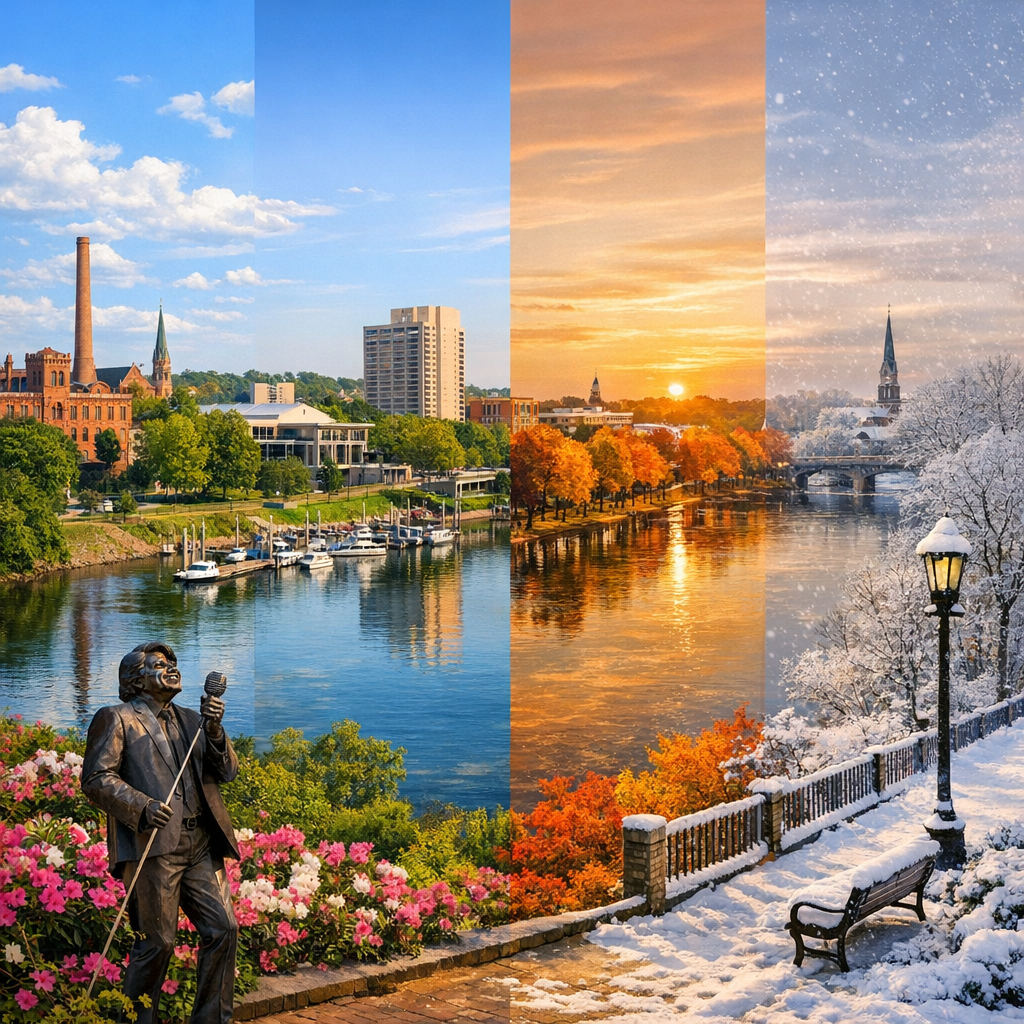
Augusta, Georgia, experiences a humid subtropical climate, characterized by hot, humid summers and mild winters. This climate offers a variety of weather patterns throughout the year, influencing daily life and activities in the region.
Seasonal Weather Patterns
Spring
Spring in Augusta brings moderate temperatures and blooming flora. Average high temperatures range from 65.5°F (18.6°C) in March to 82.4°F (28°C) in May. This season is ideal for outdoor activities, with increasing daylight hours and comfortable conditions. Source
Summer
Summers are typically hot and humid, with average high temperatures reaching 92.8°F (33.8°C) in July. The combination of heat and humidity can make outdoor activities challenging during peak hours. Residents are advised to stay hydrated and limit strenuous activities during the hottest parts of the day. Source
Fall
Fall offers a reprieve from the summer heat, with average high temperatures decreasing from 86°F (30°C) in September to 64°F (18°C) in November. The cooler temperatures and lower humidity make this season favorable for outdoor events and festivals. Source
Winter
Winters are generally mild, with average high temperatures around 58°F (14.4°C) in January. Snowfall is rare, but occasional freezing rain can occur. Residents should stay informed about weather forecasts during winter months to prepare for any sudden changes. Source
Environmental Considerations
Augusta’s climate and industrial activities have raised environmental concerns among residents. For instance, the proposed expansion of the Solvay chemical plant has led to discussions about potential increases in hazardous air pollutants. Community members are encouraged to stay informed and participate in public hearings to voice their concerns. Source
Understanding Augusta’s climate is essential for residents and visitors to make informed decisions about daily activities and environmental stewardship. Staying aware of seasonal patterns and participating in community discussions can help ensure a healthy and enjoyable environment for all.