

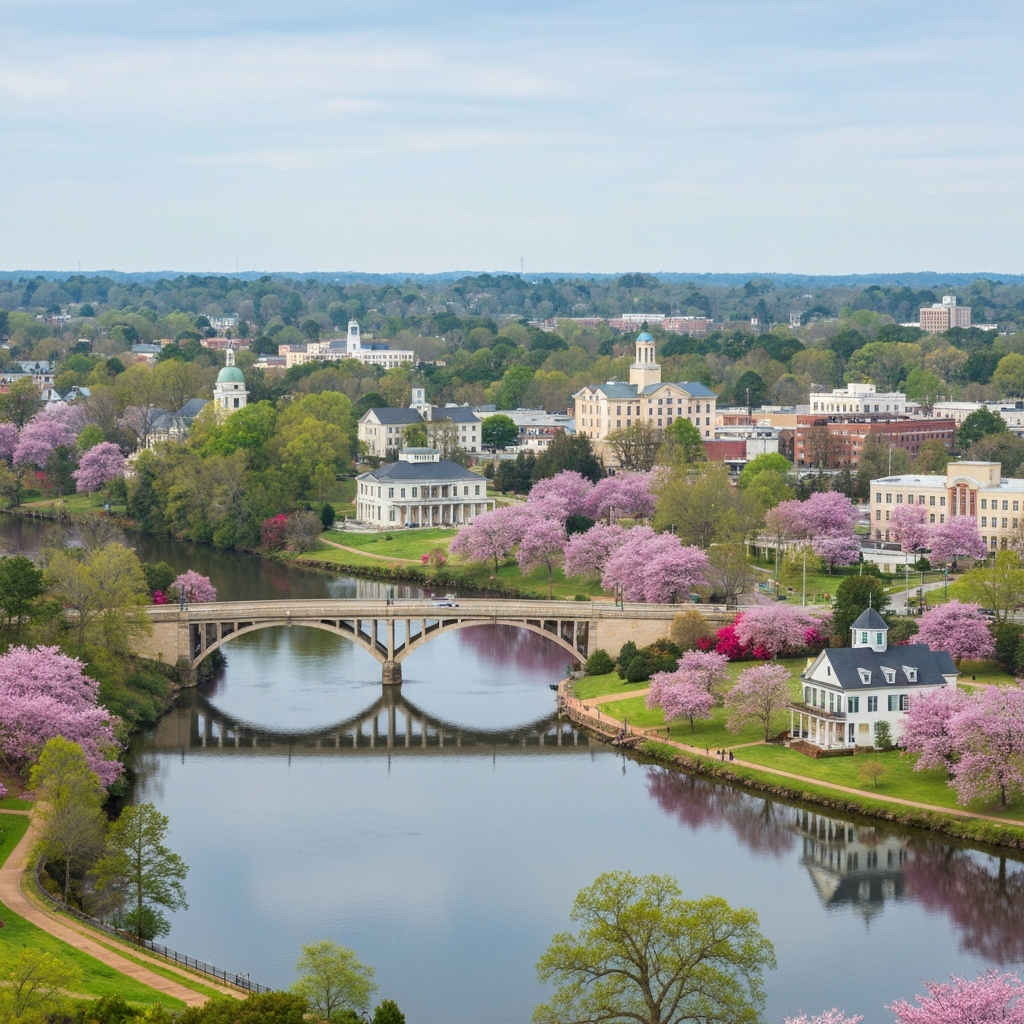
Augusta, Georgia, boasts a rich history that reflects the resilience and spirit of its community. Established in 1736 by British General James Oglethorpe, Augusta was named in honor of Princess Augusta, wife of Frederick, Prince of Wales. Its strategic location along the Savannah River made it a vital trading post and defense line during the colonial era.
Colonial Beginnings
In its early years, Augusta served as a frontier settlement, providing a buffer against potential Spanish and French incursions. The town’s layout was designed to facilitate trade and defense, fostering relationships with neighboring Native American tribes, including the Creek and Cherokee. This period laid the foundation for Augusta’s growth as a commercial hub.
Revolutionary and Civil War Eras
During the American Revolution, Augusta was a focal point of conflict, changing hands multiple times between British and American forces. It even served briefly as Georgia’s capital in the late 18th century. The Civil War further shaped the city, with Augusta housing the Confederacy’s largest gunpowder factory. The remnants of this era, including the 176-foot chimney of the Confederate Powder Works, stand as historical landmarks today.
Post-War Development and Cultural Flourishing
Following the Civil War, Augusta emerged as a center for the textile industry, leveraging the Augusta Canal to power numerous mills. This industrial boom attracted a diverse population, contributing to the city’s cultural richness. The devastating fire of 1916, which destroyed 25 downtown blocks, tested the community’s resilience. In response, residents rebuilt and revitalized the city, preserving its historical essence while embracing modernization.
Modern Augusta: A Blend of History and Progress
Today, Augusta honors its past while looking toward the future. The Augusta Museum of History, founded in 1937, serves as a custodian of the region’s heritage, offering exhibits that span 12,000 years of history. The museum’s mission is to collect, preserve, and interpret the history of Augusta and the Central Savannah River region for the education and enrichment of present and future generations. Additionally, the city hosts events like the annual Masters Tournament, drawing global attention and celebrating Augusta’s longstanding connection to golf.
As residents, we are stewards of this rich tapestry. By engaging with our history and participating in community events, we continue to weave new threads into Augusta’s ever-evolving story.